
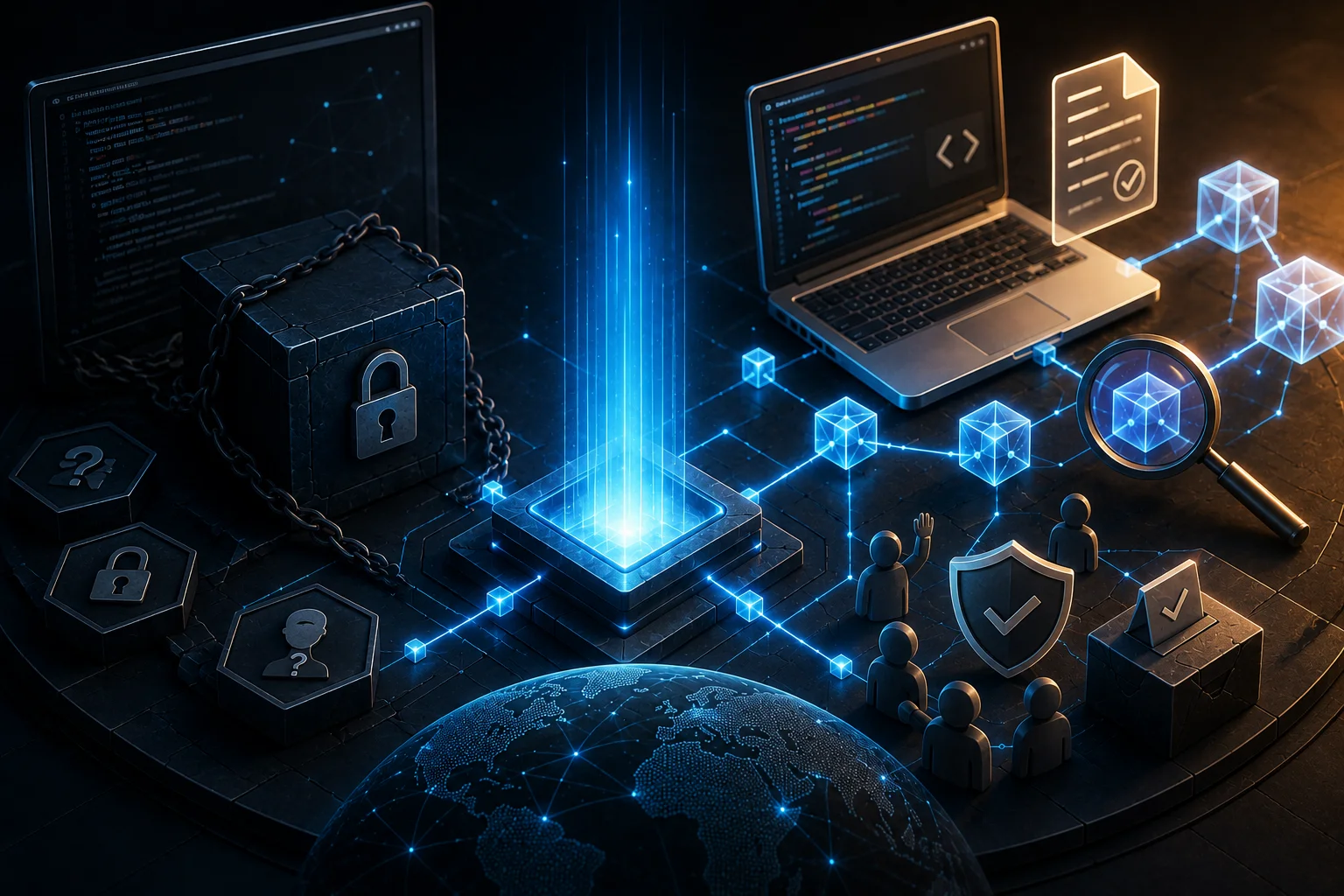
Why Web3 Needs Open Source
Decentralization without transparency is theater. Here's why open source code matters for real Web3 applications.
The Core Issue
You hear "Web3" everywhere. But here's the reality check: if code is closed, nothing is decentralized. Period.
Many projects deploy tokens and claim decentralization while keeping their contracts private. This contradicts the entire ethos of Web3.
Understanding the Stakes
Smart Contracts
Public blockchains make transactions visible to anyone. However, visibility ≠ trust. Without accessible source code:
- You can't verify token mechanics
- Hidden backdoors remain undetected
- Upgrades happen silently via private admin keys
Anyone can analyze deployed bytecode, but having clean, auditable source saves weeks of reverse engineering.
Client Software
Your connection to the blockchain runs through clients—wallets, explorers, APIs. Consider this:
| Closed Client | Open Client |
|---|---|
| Must trust devs | Verify yourself |
| Changes go unnoticed | Community flags issues |
| Vendor lock-in risk | Fork anytime |
Governance Automation
DAOs use scripts to execute votes, manage treasuries, update parameters. Private governance scripts mean:
- Unknown veto powers
- Mysterious privilege escalation
- Invisible emergency controls
If you can't read it, you can't trust it.
Practical Verification Checklist
Before interacting with any Web3 project:
✅ Contract source verified on Etherscan, Sourcify, or equivalent ✅ Public repository with commit history (not just a README) ✅ Third-party audits published publicly ✅ Upgrade mechanism documented with timelocks
❌ Proprietary dashboards requiring login for core functions ❌ Binary-only node software without reproducible builds ❌ No clear maintainer or community governance model
The Fork Safety Net
Open source creates an exit strategy. If the original team turns rogue, abandons the project, or gets coerced—you can fork the last trusted version. This threat alone keeps honest actors in line.
Bottom Line
Web3 without open source is just expensive Web2. Transparency isn't optional—it's the entire value proposition.