
What Is a Reverse Proxy? How Nginx and Cloudflare Protect the Web
Ever wonder how websites handle millions of users while staying secure and fast? Discover reverse proxies—the silent gatekeepers of web infrastructure.
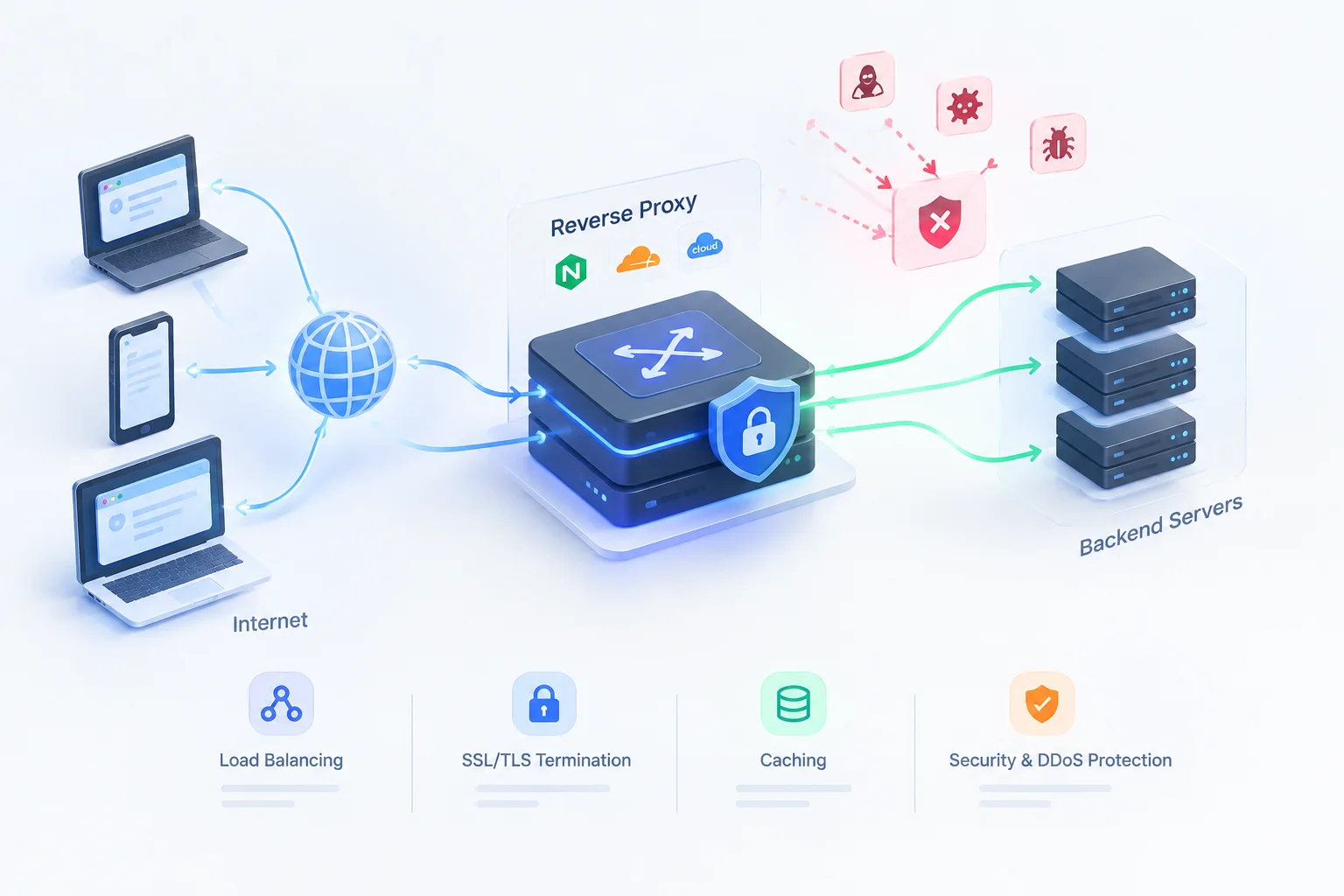
Imagine visiting a high-security office building.
You don't walk straight into an executive's private office to ask a question. Instead, you stop at the reception desk in the lobby. The receptionist greets you, verifies your identity, checks if the requested person is available, and directs your request to the right department.
In web architecture, that receptionist is a Reverse Proxy.
Whenever you browse popular websites, your browser rarely communicates directly with the actual backend application servers. Instead, your request hits a reverse proxy first.
Forward Proxy vs. Reverse Proxy: What's the Difference?
The term "proxy" simply means an intermediary acting on behalf of someone else. But direction matters:
- Forward Proxy (Protecting Clients): Sits in front of users (clients). It hides your IP address and location from the websites you visit (like a VPN or corporate web filter).
- Reverse Proxy (Protecting Servers): Sits in front of backend servers. It hides the internal server architecture from the public internet and manages incoming traffic.
FORWARD PROXY (Hides the Client)
[ Client ] ---> [ Forward Proxy ] ---> [ Internet ] ---> [ Web Server ]

REVERSE PROXY (Hides the Servers)
[ Internet User ] ---> [ Reverse Proxy ] ---> [ App Server 1 ]
                                         ---> [ App Server 2 ]
                                         ---> [ App Server 3 ]
4 Crucial Jobs of a Reverse Proxy
Why do developers put a reverse proxy in front of their applications? It solves four major web infrastructure challenges:
1. Load Balancing
If a million users visit a website simultaneously, a single application server will crash. A reverse proxy sits in front of a pool of identical backend servers and distributes incoming requests evenly using strategies like Round Robin or Least Connections.
2. SSL/TLS Termination
Encrypting and decrypting HTTPS traffic requires significant CPU power. Instead of making every backend application handle SSL certificates, the reverse proxy handles HTTPS encryption at the edge (SSL Termination), passing lightweight, unencrypted HTTP traffic to internal servers over a private network.
3. Static Content Caching
Backend servers should spend their computing power processing dynamic business logic, not serving static images, CSS stylesheets, or JavaScript files. A reverse proxy caches static files in memory and serves them instantly to users without bothering the backend.
4. Security & DDoS Protection
By masking the internal IP addresses of your backend servers, attackers cannot target your databases or application nodes directly. Global reverse proxy networks (like Cloudflare) can also filter out malicious bot traffic and absorb massive Distributed Denial of Service (DDoS) attacks before they reach your origin server.
Popular Open-Source Reverse Proxies
Developers rely on several industry-standard open-source tools to manage reverse proxy traffic:
- Nginx: The legendary, lightweight web server and reverse proxy powering a huge percentage of the top 10 million websites.
- Caddy: A modern open-source web server written in Go that automatically provisions and renews SSL certificates via Let's Encrypt out of the box.
- HAProxy: A high-performance, specialized load balancer used by high-traffic platforms requiring microsecond-level performance.
The Gateway to Scalable Software
A reverse proxy turns vulnerable, single-server setups into resilient, high-availability networks. By handling security, traffic routing, and caching at the edge, reverse proxies allow developers to focus on building features while keeping web applications fast and secure.