
Web3 Security: How to Protect Your Assets in 2026
A complete guide to digital asset protection. We break down wallet types, smart contract hygiene, and new fraud prevention methods in the Web3 era.
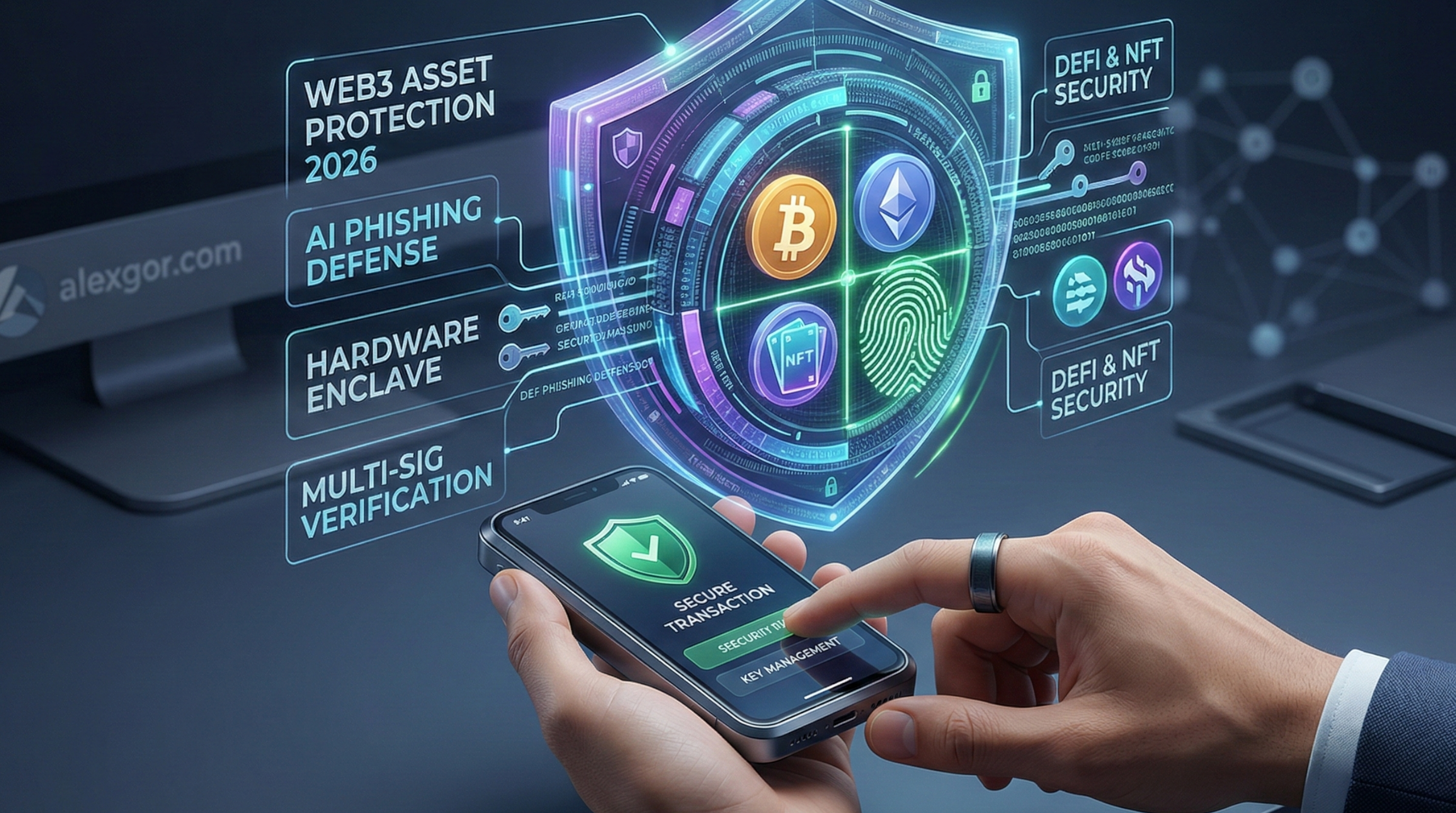
In the world of Web3, there is a golden rule: "Not your keys, not your coins." The freedom to manage assets without intermediaries places full responsibility for their safety on the user.
In this article, we will cover practical steps to help you minimize risks and feel confident in a decentralized environment.
1. Choosing a "Home" for Your Assets: Wallet Types
The first step to security is separating assets into different types of storage based on their purpose.
- Cold Wallets (Hardware Wallets): Devices like Ledger, Trezor, or Tangem. Ideal for long-term storage (HODL). Keys never leave the device.
- Hot Wallets (Software Wallets): Browser extensions (MetaMask, Rabby). Convenient for daily transactions but more vulnerable to system compromises.
- Multi-sig Wallets: Solutions like Safe (formerly Gnosis Safe) that require transaction confirmation from multiple addresses. An excellent choice for DAOs and collaborative projects.
Tip: Use different wallets for different purposes. Keep one strictly for storage and another for active NFT minting and interacting with new protocols.
2. Seed Phrase and Private Key Hygiene
Your seed phrase (12–24 words) is the only master key to all your funds.
- No Clouds: Never store your seed phrase in phone notes, Google Drive, or as a screenshot in your gallery.
- Physical Copy: Write it down on paper or use steel plates that are resistant to fire and water.
- The Rule of Silence: No official support or project admin will ever ask for your seed phrase. If they do, they are 100% scammers.
3. Interacting with Smart Contracts: Approvals and Revoke
When you trade on a DEX or buy an NFT, you give a smart contract "Approval" to spend your tokens. Malicious contracts may request unlimited access.
- Use Modern Wallets: For example, Rabby Wallet clearly shows exactly what you are signing and what access rights the website is requesting.
- Regular Audits: Once a month, visit services like Revoke.cash or Etherscan Token Approval to revoke permissions from protocols you no longer use.
4. New Threats in 2026: AI Phishing and Social Engineering
As neural networks have evolved, attacks have become more sophisticated:
- Deepfakes: Video calls from "founders" of well-known projects offering participation in a private sale.
- Address Poisoning: Scammers send 0 tokens to your wallet from an address that visually (first and last characters) resembles your own. Be extremely careful when copying addresses from your transaction history.
Security Checklist Before Every Transaction:
- I verify the website URL through trusted sources (CoinMarketCap, project's official Twitter/X).
- I use a separate browser for Web3 operations (clean of unnecessary extensions).
- I carefully read the transaction details in the wallet before clicking "Confirm."
- My hardware wallet is connected only during the signing process.
Conclusion
Web3 is a space of massive opportunities, but security here requires discipline. Start small: buy a hardware wallet and perform an audit of your approvals today.