
RWA: How Real World Asset Tokenization is Changing the Web3 Landscape in 2026
Breaking down the main trend of 2026: bringing real-world assets (bonds, real estate, and gold) on-chain. Why institutional investors are no longer afraid of crypto and how to profit from it.
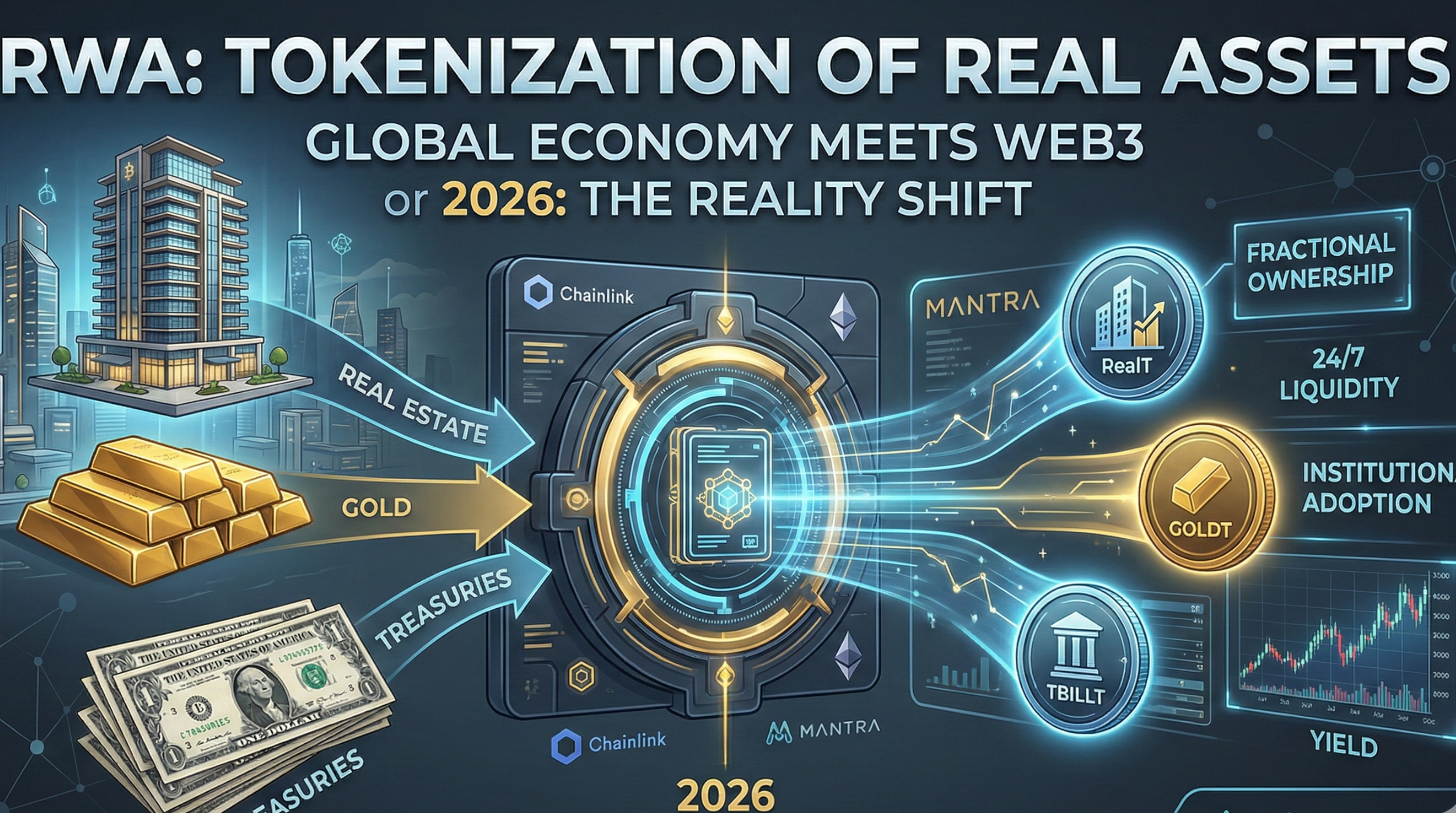
In 2026, Web3 is no longer a "sandbox" for memecoin speculation. Today, the core value is concentrated in RWA (Real World Assets) — tokenized assets from the real world. According to analysts' forecasts, the tokenized US Treasury bonds market has already exceeded $50 billion, and the total volume of RWAs on the blockchain continues to grow exponentially.
In this article, we will break down why tokenization is not just a trend, but the new architecture of the global economy.
What are RWAs and Why Are They Important Right Now?
RWA is the process of issuing digital tokens on a blockchain that represent ownership rights to physical or financial assets: real estate, gold, government bonds, or private credit.
Key Advantages in 2026:
- 24/7 Liquidity: You can now sell a share of New York commercial real estate in three clicks at any time of the day.
- Fractional Ownership: Investments in high-value assets (e.g., gold bars or luxury housing) have become accessible to users with as little as $10 in capital.
- Transparency and Settlement: Using smart contracts eliminates the chain of intermediaries, reducing fees and settlement times from days to seconds.
Top RWA Narratives in 2026
1. Tokenized Treasuries
Market leaders like Ondo Finance have made US government bonds accessible within DeFi protocols. This has allowed crypto-native investors to earn a stable yield without exiting to fiat.
2. Private Credit
Protocols like Centrifuge and Maple Finance connect real-world businesses in need of capital with the liquidity of Web3 investors. This creates a transparent bridge between the real sector of the economy and the blockchain.
3. Institutional Adoption
In 2026, major banks are no longer just "studying" the technology. JPMorgan has expanded the functionality of its JPM Coin to public blockchains, and BlackRock is actively integrating its funds with L2 networks for instant settlement.
RWA Tech Stack: Who is Leading the Market?
For RWAs to work, reliable infrastructure is required. Here are the three pillars the sector stands on:
- Oracles (Chainlink): Ensure the transmission of accurate real-world asset price data to smart contracts.
- Compliance-focused L1s/L2s (MANTRA, Plume): Specialized blockchains that natively support identity verification (KYC) and regulatory requirements at the protocol level.
- ZK-Proofs: Zero-knowledge proof technology allows users to verify asset ownership or pass compliance checks without revealing their personal data.
AI + RWA: Portfolio Automation
The latest innovation of 2026 is AI wallets. Neural networks can now autonomously manage your tokenized asset portfolio, shifting liquidity from tokenized gold to bonds depending on market conditions, using autonomous agents to execute trades.
Conclusion
RWAs are turning the blockchain into a global "Settlement Layer." For investors and developers in Web3, this means transitioning to more sustainable and fundamental earning models.