
How Web3 Replaces Centralized DNS: The Tech Behind Decentralized Naming
Ever wondered how Web3 domains work without domain registrars or ICANN? Explore how decentralized naming protocols map complex cryptographic public keys to human-readable web addresses.
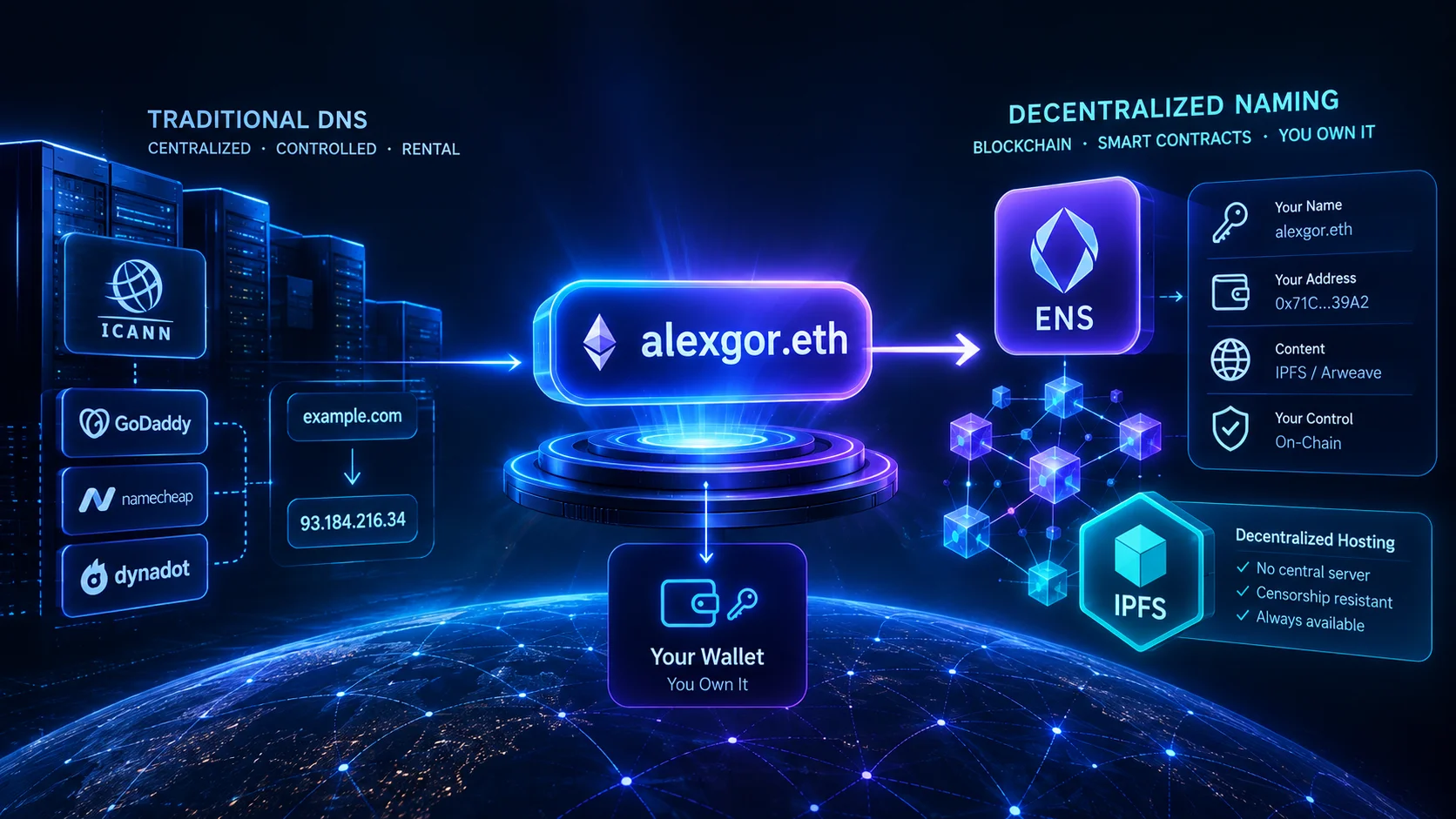
How Web3 Replaces Centralized DNS: The Tech Behind Decentralized Naming
Every time you type alexgor.com into your browser, an invisible piece of internet infrastructure called the Domain Name System (DNS) goes to work. DNS acts as the internet's phonebook, translating human-friendly domain names into machine-readable IP addresses (like 192.0.2.1).
While traditional DNS has powered the web for decades, it relies on a hierarchical, centralized model governed by organizations like ICANN and corporate domain registrars.
In Web3, decentralized naming protocols (such as ENS or Unstoppable Domains) replace this centralized architecture with smart contracts and cryptographic key pairs.
The Weaknesses of Traditional Web2 DNS
Traditional domain names are not owned by users; they are leased. This creates several architectural vulnerabilities for developers and site operators:
- Centralized Control & Seizures: Domain registrars and governments can unilaterally seize, freeze, or redirect a domain name by modifying DNS records at the registrar level.
- DNS Cache Poisoning & Hijacking: Hackers can spoof DNS routing tables to intercept traffic and redirect users to malicious servers without modifying the actual website code.
- Recurring Fees: Users must pay annual rental fees to registrars to maintain control of their domain name.
How Decentralized Naming Infrastructure Works
Decentralized domain systems operate directly on blockchain networks using registry smart contracts. Instead of querying a DNS server, your browser or Web3 application queries a decentralized smart contract.
1. Cryptographic Key Mapping
In Web3, your digital identity is represented by a long, hexadecimal cryptographic hash (e.g., 0x71C...39A2).
A decentralized naming contract acts as a public key-value store. It creates a verifiable link between a human-readable name (like alexgor.eth) and your underlying cryptographic address.
2. Smart Contract Registrars
Instead of an intermediary company holding your domain records: The domain is minted as a unique non-fungible token (NFT) or smart contract record directly to your wallet.
You hold 100% cryptographic custody of the domain record.- Modifying records (such as updating where the domain points) requires a cryptographic signature from your private key.
3. Reverse Resolution
Web3 naming protocols support both forward and reverse resolution: Forward Resolution: Translates name.eth $\rightarrow$ 0x71C...39A2 (finding the address behind a name).
0x71C...39A2 $\rightarrow$ name.eth (allowing applications to display your human-readable handle when you log in).
Combining Web3 Domains with IPFS for Unstoppable Websites
Traditional domains point to IP addresses hosting Web2 servers. A Web3 domain can point its contenthash record directly to an IPFS Content Identifier (CID).
When combined:
- The website content is hosted across a peer-to-peer storage network (IPFS).
- The website domain is resolved through a decentralized smart contract (ENS).
Because there is no central server to shut down and no central DNS registrar to hijack, the resulting web application becomes completely censorship-resistant and high-availability by design.
The Future of Decentralized Resolution
As Web3 developer tooling matures, native browser integration for decentralized naming protocols is becoming standard. By removing middleman registrars and anchoring identity to public-key cryptography, Web3 naming transforms domains from temporary subscriptions into permanent, self-sovereign digital infrastructure.