
How Web3 Indexing Works: Querying Blockchain Data Efficiently
Reading raw data directly from a blockchain node is painfully slow and inefficient. Discover how decentralized indexing protocols transform raw block data into queryable GraphQL APIs for dApps.
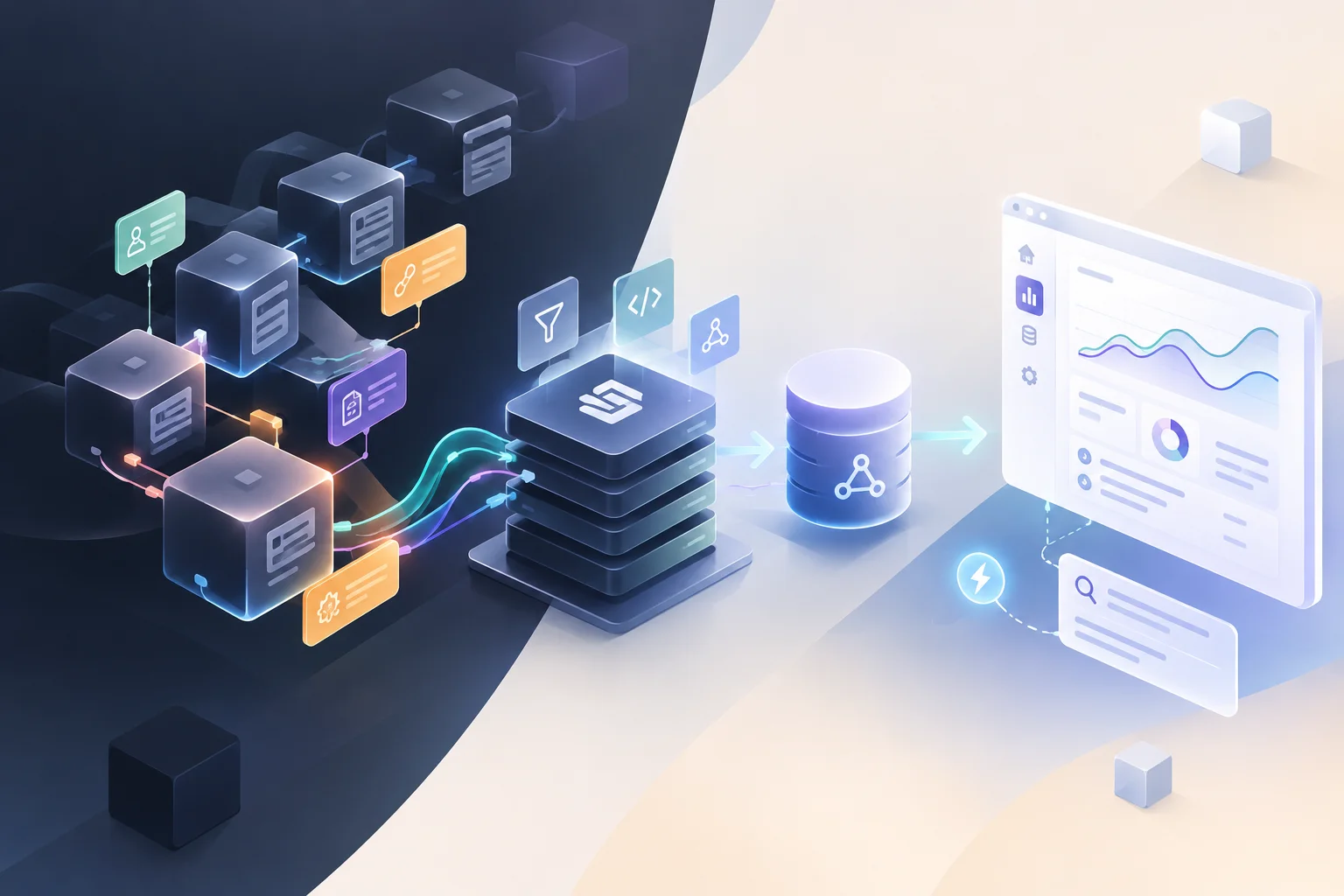
Blockchains excel at storing sequential transactions securely, but they are fundamentally inefficient database query engines.
If you want to display all blog posts written by a specific author on a traditional Web2 platform, a standard SQL database processes that request in milliseconds: SELECT * FROM posts WHERE author_id = 42.
In Web3, data is stored in linear block history. To find every smart contract event triggered by a single user across millions of historical blocks, a standard node would have to read and parse every single block individually—a process that could take hours.
This fundamental data retrieval problem is solved by Blockchain Indexing Infrastructure.
The Read Problem in Web3 Architecture
To understand why indexing is necessary, consider how a blockchain node handles data:
- Optimized for Writes, Not Reads: Nodes are structured to quickly append new blocks and verify cryptographic signatures, not to index complex relational queries across historical logs.
- RPC Rate Limits: Basic RPC (Remote Procedure Call) endpoints allow basic key-value lookups (e.g., "What is the current state of variable X?"), but struggle with complex historical filtering or pagination.
- UI Frustration: Without an indexer, loading a Web3 user interface would require thousands of individual network requests, causing massive lag for end users.
What Is Blockchain Indexing?
Blockchain Indexing is the process of extracting raw, unstructured event logs from blockchain blocks, processing that data according to defined schema rules, and saving it into an organized, queryable database (such as PostgreSQL or a Graph database).
Instead of making hundreds of slow RPC requests to a blockchain node, Web3 applications make a single fast request to an indexed API endpoint.
How Indexing Works Step-by-Step
Protocols like The Graph provide decentralized open-source indexing networks through custom configurations called Subgraphs. Here is the data flow under the hood:
+-------------------------------------------------------+
|                    SMART CONTRACT                     |
|                   (Emits Events)                      |
+-------------------------------------------------------+
                           |
                           v
+-------------------------------------------------------+
|                   BLOCKCHAIN NODE                     |
|               (Ingests Raw Blocks)                    |
+-------------------------------------------------------+
                           |
                           v
+-------------------------------------------------------+
|                    INDEXER NODE                       |
|         (Transforms Data via WASM Mappings)           |
+-------------------------------------------------------+
                           |
                           v
+-------------------------------------------------------+
|                  GRAPHQL DATABASE                     |
|            (Stores Organized Entities)                |
+-------------------------------------------------------+
                           |
                           v
+-------------------------------------------------------+
|                   WEB3 FRONTEND                       |
|           (Queries API via GraphQL)                   |
+-------------------------------------------------------+
1. Smart Contract Event Emission
When an action occurs in a smart contract (for example, publishing a new article or updating a profile record), the contract emits a cryptographic event log containing the relevant parameters.
2. Ingestion & Filtering
An Indexer Node continuously monitors new blocks coming off the blockchain. It filters out irrelevant transactions and isolates only the event logs registered in the manifest file.
3. WebAssembly (WASM) Mapping
The raw event payload is passed into a developer-written WebAssembly (WASM) mapping script. This script transforms raw hexadecimal data into structured entities defined in a GraphQL schema file.
4. Serving GraphQL Queries
The transformed data is stored in a relational store. Frontend developers can now query this data instantly using standard GraphQL queries:
query GetUserArticles {
  articles(where: { author: "0x71C...39A2" }, orderBy: timestamp, orderDirection: desc) {
    id
    title
    contentHash
    timestamp
  }
}
Why Decentralized Indexing Infrastructure Matters
In the early days of Web3, developers relied on private centralized servers to index blockchain data. However, hosting a private database reintroduces a single point of failure: if the central server crashes or censors requests, the Web3 application interface goes down even if the blockchain itself remains fully operational.
Decentralized Indexer Networks solve this by replacing single servers with a competitive global network of independent node operators. Node operators are incentive-aligned through cryptographic query proofs, ensuring that data served to Web3 applications remains uptime-resilient, tamper-proof, and deterministic.
The Middleware Layer of the Web3 Stack
Just as search engines made the early Web2 internet navigable by indexing HTML pages, decentralized indexers make blockchain data usable for modern applications. Indexing serves as the critical middleware layer—bridging raw cryptographic execution layers with fast, responsive user interfaces.