The Evolution of the Internet: From Web2 to Web3 Explained
Everyone is talking about Web3, but what does it actually mean? Explore the journey from the early days of static web pages to the new era of decentralization and true digital ownership.
The Internet is Upgrading
If you have spent any time online recently, you have probably seen the term "Web3" thrown around. It is often mentioned alongside cryptocurrencies, NFTs, and the metaverse. For a beginner, it can sound like a complex, futuristic buzzword.
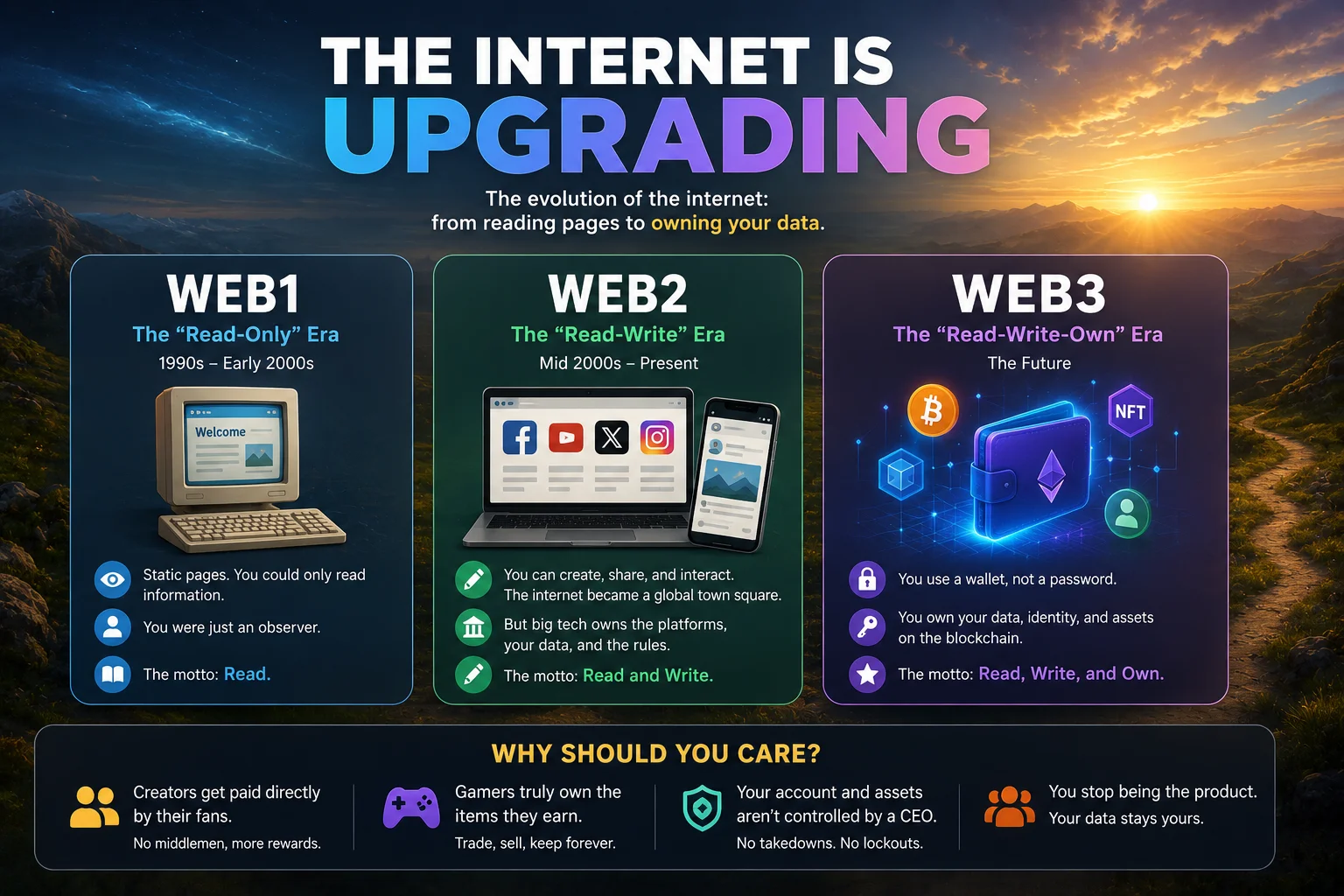
However, to understand Web3, you do not need a degree in computer science. You simply need to look at how the internet has evolved over the last three decades. [cite_start]The transition to Web3 is fundamentally about the evolution of the internet: moving from just reading pages to actually owning your data.
Let's break down this journey into three simple stages.
Web1: The "Read-Only" Era (1990s — Early 2000s)
Think back to the early days of the internet. Web1 was basically a giant digital encyclopedia.
- How it worked: Companies and developers built static web pages, and regular users simply consumed the information.
- Your role: You were just an observer. You could read news articles, look at pictures, or download files, but you could not leave comments, create profiles, or interact with other users easily.
- The motto: Read.
Web2: The "Read-Write" Era (Mid 2000s — Present)
Eventually, the internet became interactive. This is the internet you are using right now. Platforms like Facebook, YouTube, and Wikipedia allowed everyday people to become creators.
- How it works: You can create your own content, upload videos, leave reviews, and build massive audiences. The internet became a global town square.
- The catch: While you create the content, you do not own it. Massive tech corporations (like Google, Meta, or X) own the servers, the algorithms, and your personal data. They can delete your account, monetize your private information, or change the rules at any moment.
- The motto: Read and Write.
Web3: The "Read-Write-Own" Era (The Future)
This brings us to Web3. Web3 is a movement to take the power away from centralized tech giants and give it back to the users.
Instead of relying on corporate servers, Web3 operates on blockchains—decentralized networks maintained by thousands of independent computers around the world.
- How it works: In Web3, you do not need an email and password to log in. You use a digital wallet (like MetaMask or Phantom). When you publish content, buy an in-game item, or earn money, it is tied directly to your wallet.
- True Ownership: Because your assets live on the blockchain, no CEO or corporation can delete your account or seize your funds. You truly own your digital identity, your data, and your money.
- The motto: Read, Write, and Own.
Why Should You Care?
Web3 is not just about financial speculation; it is a fundamental upgrade to user rights. In the Web3 era, creators get paid directly by their fans without platforms taking a 50% cut. Gamers actually own the rare items they earn. And regular users stop being the "product" that corporations sell to advertisers.
The transition will not happen overnight, and the technology is still becoming more user-friendly. But understanding the core difference—ownership—is your first step into the decentralized future.