
Beyond "Sign in with Google": How Decentralized Identity (DID) Changes Internet Privacy
Tired of tech giants tracking your logins and owning your personal data? Discover Decentralized Identity (DID)—the Web3 technology returning control of your digital footprint back to you.
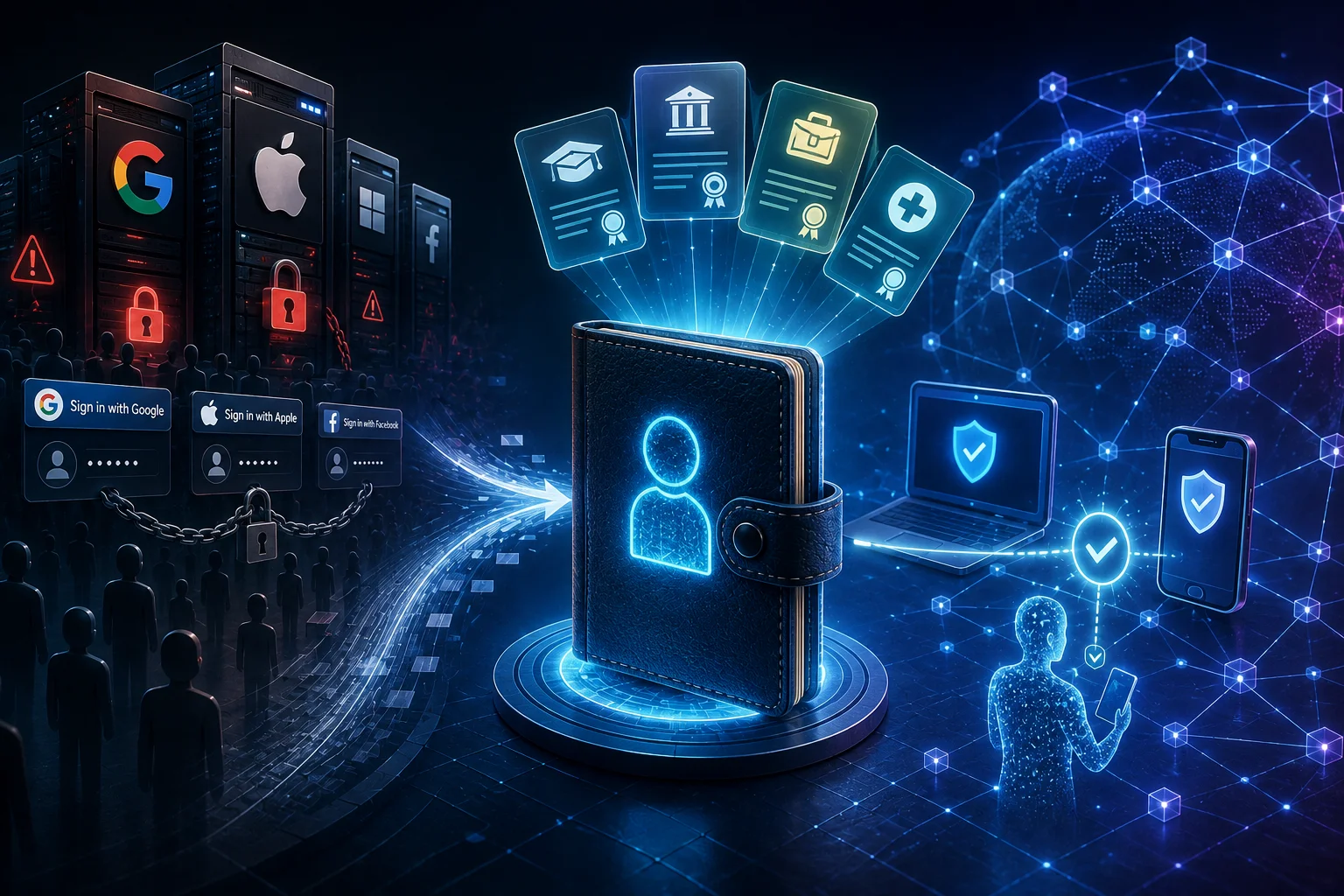
Every day, you likely click "Sign in with Google" or "Sign in with Apple" to log into dozens of websites. It is convenient, fast, and saves you from remembering dozens of passwords.
However, this convenience comes with a huge technological trade-off. A small handfull of centralized corporations now act as the gatekeepers of your entire digital identity. If Google suspends your account, you instantly lose access to all connected services, third-party apps, and personal documents.
This is where Decentralized Identity (DID) comes in. DID is one of the most important infrastructure technologies in Web3, designed to fix how identity works on the internet without relying on cryptocurrencies or financial tokens.
What is a Decentralized Identifier (DID)?
In traditional Web2, your online identity is stored on a centralized database belonging to a tech company.
A Decentralized Identifier (DID) is a globally unique, cryptographically secure digital address that is owned and controlled entirely by you. Instead of living on a corporation's server, your identity is rooted in a decentralized network or blockchain that no single authority can tamper with or shut down.
How DID Technology Works: The Digital Passport Model
Think of Decentralized Identity like a physical leather wallet containing official credentials:
- The Issuer: An authority (like a university, government, or employer) issues a digital credential to you.
- The Holder (You): You store this credential securely on your own device or Web3 wallet.
- The Verifier: When a website or service needs to confirm something about you, you present a cryptographic proof from your wallet without revealing extra sensitive information.
Zero-Knowledge Data Verification
One of the most powerful features of DID technology is selective disclosure.
Imagine trying to enter a venue that requires you to be over 21: Traditional Way: You show your driver's license. The bouncer sees your full name, home address, exact birthdate, and driver's license number.
Web3 DID Way: Your wallet generates a mathematical proof called a Zero-Knowledge Proof (ZKP). The website instantly verifies a simple statement—"Yes, this user is over 21"—without ever learning your birthdate, full name, or address.Why Decentralized Identity Matters for the Future Web
Decentralized Identity is transforming online privacy and security across several key areas:
Eliminating Data Breaches: Companies will no longer need to store thousands of user passwords or social security numbers on central servers, removing prime targets for hackers.
True Data Portability: Your reputation, online achievements, verified credentials, and digital footprint move with you seamlessly across different platforms.Passwordless Authentication: You can log into any website globally with a single click using public-key cryptography—eliminating passwords and phishing scams entirely.
Protection Against Censorship: Because no single entity controls the identity registry, no corporation can unilaterally delete your digital identity.The Shift to Self-Sovereign Identity
Decentralized Identity represents a fundamental technology shift: moving from corporate-owned profiles to Self-Sovereign Identity (SSI). As Web3 technologies mature, DID will serve as the invisible privacy foundation for secure logins, verified digital documentation, and fraud prevention across the entire internet.