
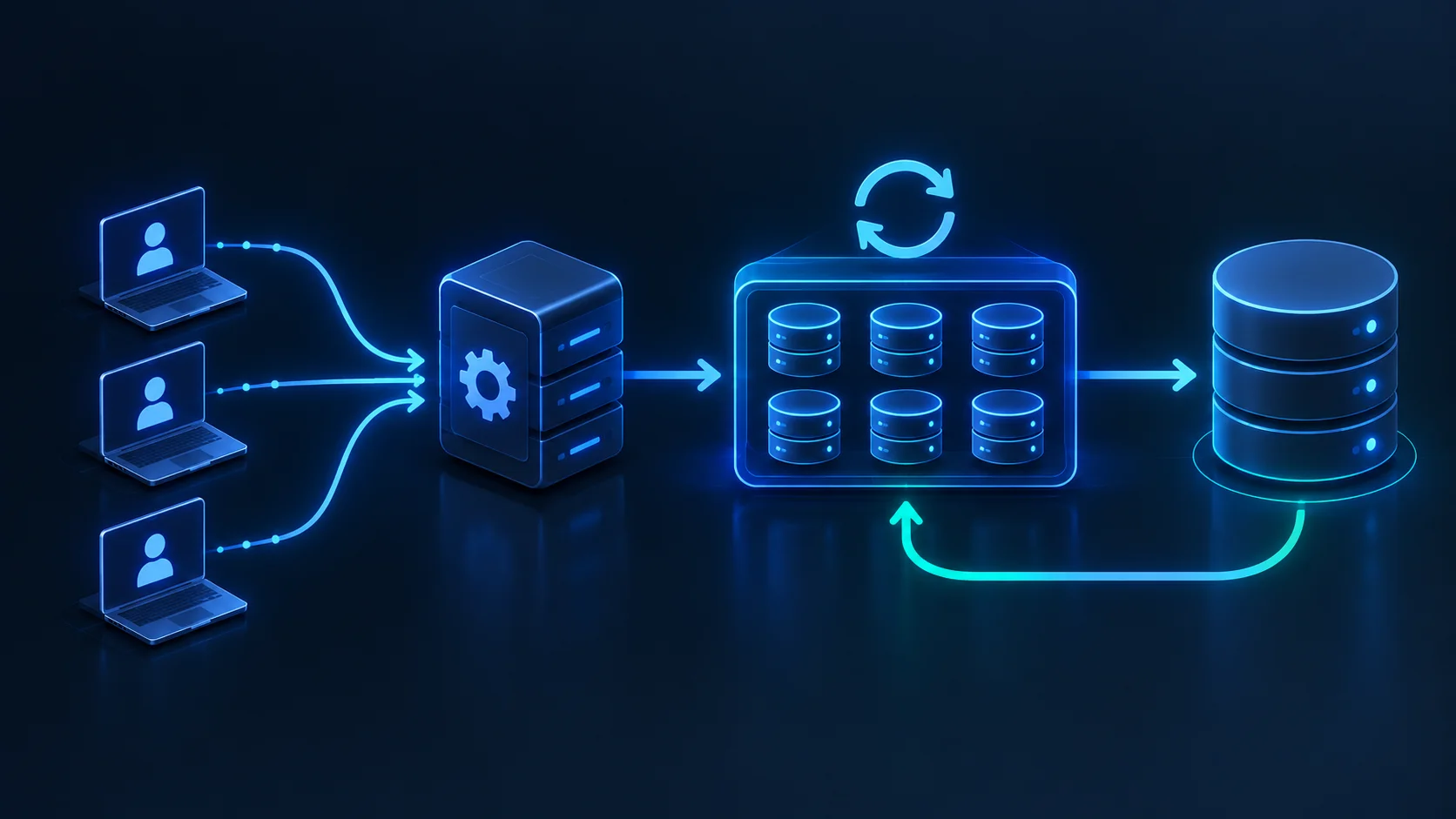
Database Connection Pooling Explained: How Reusing Connections Saves Server Resources
Ever wonder why opening a new database connection for every API request crashes servers? Discover connection pooling—the backend pattern that keeps apps fast and scalable.
Imagine running a high-end restaurant kitchen where, instead of having permanent chefs on staff, the restaurant hires and fires a brand-new chef from scratch every single time a customer orders a burger.
The manager has to post a job listing, interview the applicant, verify their background, set up a workstation, and then fire them the moment the burger is plated. For the next order, the entire hiring and firing cycle repeats.
The kitchen would instantly grind to a halt, wasting immense time and energy.
In backend software engineering, opening a brand-new connection to a database for every single incoming HTTP request commits this exact architectural mistake. To keep applications fast and scalable, backend engineers use Database Connection Pooling.
The Problem: The Cost of Opening Database Connections
When a client browser sends an API request to your backend server (e.g., Node.js, Go, or Python), your application often needs to query a database to fetch user data or save records.
If your code opens a fresh physical connection to the database on every single request:
- TCP Handshake Overhead: The server must establish a brand-new TCP network connection.
- Authentication & SSL Handshake: The database must verify credentials and negotiate encryption keys.
- Memory Allocation: The database allocates dedicated memory buffers and background threads for that specific client socket.
This entire process takes anywhere from 10 to 100 milliseconds. Under heavy load when 500 users visit your site simultaneously, your database CPU maxes out just managing connection handshakes rather than actually processing queries, leading to severe latency and server crashes.
What Is Connection Pooling?
A Connection Pool is a cache of pre-opened, active database connections maintained in server memory.
Instead of opening a new connection for each request and closing it immediately afterward, your application borrows an existing connection from the pool, uses it to run queries, and then returns it back to the pool so another request can reuse it.
How Connection Pooling Works Under the Hood
The connection pool operates like a pool of rental cars at an airport:
- Initialization: When your backend application boots up, it opens a fixed number of connections (e.g., 10 idle connections) and holds them open.
- Checkout (Borrowing): When an API request arrives, the application requests a connection from the pool. The pool hands over an active, ready-to-use connection instantly (taking 0 milliseconds).
- Execution: The application runs its SQL queries over that connection.
- Check-in (Returning): Once the query finishes, the application returns the connection to the pool. The connection is cleared of any temporary session states and remains open, waiting for the next request.
If all connections in the pool are currently busy, incoming requests wait in a queue until a connection becomes available, preventing the database from crashing under traffic spikes.
Best Practices for Backend Engineers
- Configure Pool Size Wisely: Setting the pool size too small causes request queuing and high latency. Setting it too large overwhelms the database server's maximum allowed connection limit. A common rule of thumb is balancing pool size based on available CPU cores and database limits.
- Handle Connection Leaks: Always ensure your code guarantees that borrowed connections are returned to the pool (using
try/finallyblocks or ORM lifecycle hooks). If a request crashes without returning its connection, the pool permanently loses an available slot. - Implement Timeouts: Set maximum idle timeouts so that dead or stale network connections are automatically closed and replaced with fresh ones.
The Foundation of Resilient Backends
Database connection pooling bridges the gap between resource-heavy network operations and high-throughput application demands. By replacing wasteful connection churn with instant reuse, connection pooling keeps backend services lightning-fast and stable under pressure.